Let a Professional Handle Your Fire Restoration

The process of fire restoration can be extraoridnarily involved. Private homeowners and companies can often be devastated by the damage caused by this kind of event. One aspect that gives peace of mind involves knowing when the right professional has been hired. That is one of the reasons it is improtant to hire a firm that is associated with the Institute of Inspection Cleaning and Restoration Cerfification.

Homeowners and business owners may be in shock from the initial devastation. It is imporatnt to try and follwo the proper steps to achieve a complete fire restoration. Service providers that are associated with the Institute will have the following distinctions: Current training, safety and health certifications, vast amounts of experience in restoration projects and the proper licenses and insurance information. Customers should also check all references and obtain price quotes prior to hiring anyone. Any contracts that are presented should be reviewed closely.

The first step in the process is to clean up as much of the existing area as possible. If the area is not immediately cleaned, soot resudue and permanent damage can be left behind. If the home or business owner does the initial cleaning, it is important to follow these steps.

  • When cleaning, always use dust masks and open the area for proper ventilation.
  • Clean from the ceilings to the floors and vacuum all floors and upholstery.
  • Wash any items that can be laundered.
  • Clean the outside with a pressure washer if available.

If immediate clean up is not done, it can lead to devastating effects. Within minutes of fire and smoke damage, appliances and many items will discolor to a yellow hue. After a few hours, acid will stain bathrooms and many other areas of the home or business. Within days, walls will discolor permanently, and items will begin to rust due to the acid residue. Finally, after weeks, the cost of clean-up will become substantially more expensive. The building and furnishings can be permanently damaged by the acid left behind. Soot residue will be layered throughout the home or business. For these reasons, it is vital to contact a professional associated with the Institute of Inspection Cleaning and Restoration Certification to utilize fire restoration techniques to return the home or business to a pre-loss state. One company or service provider should be able to handle the damage. The seal of Certification by the Institute should be shown on any provider’s website. This shows the customer the reliability and the expertise of the service provider.

Residue and smoky odors need to be removed immediately. Professionals will use the process of fire restoration to achieve satisfactory results. These providers will remove the source of the odor, clean any items that can be salvaged, get rid of any lingering odor with an odor counteractant and deodorizing fog. Finally, the provider will seal salvageable items to encapsulate odor and prevent further recontamination.

Home and business owners that are educated in the fire restoration process can minimize the cost of repair. Professionals can be contacted in a timely manner to return the area to a pre-loss state. By hiring the right professionals, the victims can have some peace of mind during an incredibly stressful time.

Source: Have a Professional Handle the Process of Fire Restoration – IICRC – Feb. 15, 2017
Hazards of Water Damage

The primary goal of water damage restoration is to help you get back to your normal routine by restoring your property to its pre-flooded condition.

The secondary goal of restoration professionals is to minimize these three water damage health hazards:

  1. Mold growth
  2. Bacterial growth
  3. Structural damage

Mold Growth

Where there is moisture, there will be mold. Unfortuantely, if you experience water damage from a flood, the issue of mold is the bigger concern, because there is so much moisture to promote mold growth. Mold is a problem because it can cause illness, and this is the primary reason you want to prevent mold from growing. Exposure to mold can affect many of your body’s systems, including vascular, digestive, respiratory, neurological, skin, urinary, reproductive and immune.

Bacterial Growth

One of the main priorities of a restoration contractor is to determine the category hazard of the water:

  • Category 1 – Clean water – Faucet lines (drinking water)
  • Category 2 – Grey water – Appliances (washing machine)
  • Category 3 – Black water – Sewage (toilet)

This is especially important, because the worst type of water is black water, which can cause some serious health conditions: gastorenteritis, Weil’s Disease (aka Leptospirosis, Hepatitis, acute respiratory illness and tetanus.

The number one rule about water damage is the longer you wait, the worse it will get. This is particularaly true when you are trying to prevent hazardous bacteria from growing. Category 1 water can turn into category 2 water and eventually category 3 water, which is the most toxic and causes many illnesses.

Structural Damage

Water damage can impact the structural integrity of a property because large amounts of water can degrade the strength of the materials. This is particularly true when mold begins to grow, because mold feeds on the material and will continue to feed until it has finished consuming the material. This is the reason wood will rot when mold contaminates it. As the wood is consumed and begins to rot, this will negatively impact the structural integrity of the home, creating a health hazard. Not to mention, rotting wood will reduce the value of the property as well.

Source: What are the Top 3 Water Damage Hazards? – Blog – Mold b Gone

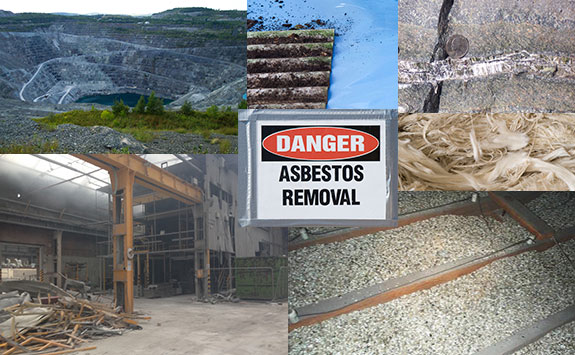
Asbestos in the Home

Even if asbestos is in your home, this is usually not a serious problem. The mere presence of asbestos in a home or a building is not hazardous. The danger is that asbestos materials may become damaged over time. Damaged asbestos may release asbestos fibers and become a health hazard. The best thing to do with asbestos material in good condition is to leave it alone! Disturbing it may create a health hazard where none existed before. Read this before you have any asbestos material inspected, removed or repaired.

What is Asbestos?

Asbestos is a mineral fiber. It can be positively identified only with a special type of microscope. There are several types of asbestos fibers. In the past, asbestos was added to a variety of products to strengthen them and to provide heat insulation and fire resisitance.

Where Asbestos Hazards May be Found in the Home

  • Some roofing and siding shingles are made of asbestos cement
  • Houses built between 1930 and 1950 may have asbestos insulation
  • Asbestos may be present in textured paint and in patching compounds used on wall and ceiling joints, the use was banned in 1977
  • Artificial ashes and embers sold for use in gas-fired fireplaces may contain asbestos
  • Older products, such as stove-top pads may have some asbestos compounds
  • Wall and floors around wood-burning stoves may be protected with asbestos paper, millboard or cement sheets
  • Asbestos is found in some vinyl floor tiles and the backing on vinyl sheet flooring and adhesives
  • Hot water and steam pipes in older houses may be coated with an asbestos material or covered with an asbestos blanket or tape
  • Oil and coal furnaces and door gaskets may have asbestos insulation

How Can Asbestos Affect My Health?

From studies of people who were exposed to asbestos in factories and shipyards, we know that breathing high levels of asbestos fibers can lead to an increased risk of:

  • Lung cancer
  • Mesothelioma, a cancer of the lining of the chest and the abdominal cavity
  • Asbestiosis, in which the lungs become scarred with fibrous tissue

The risk of lung cancer and mesothelioma increases with the number of fibers inhaled. The risk of lung cancer from inhaling asbestos fibers is also greater if you smoke. People who get asbestosis have usually been exposed to high levels of asbestos for a long time. The symptoms of these diseases do not usually appear until about 20 to 30 years after the first exposure to asbestos.

Many people exposed to small amounts of asbestos, as we all are in our daily lives, do not develop these health problems. However, if disturbed, asbestos material may release asbestos fibers, which can be inhaled into the lungs. The fibers can remain there for a long time, increasing the risk of disease. Asbestos material that would crumble easily if handled, or that has been sawed, scraped or sanded into a powder, is more likely to create a health hazard.

Where Can I Find Asbestos and When Can It be a Problem?

Most products made today do not contain asbestos. Those few products made which still contain asbestos that could be inhaled are required to be labeled as such. However, until the 1970s, many types of building products and insulation materials used in homes contained asbestos. Common products that might have contained asbestos in the past, and conditions which may release fibers, include:

  • Steam pipes, boilers and furnace ducts insulated with an asbestos blanket or asbestos paper tape. These materials may release asbestos fibers if damaged, repaired or removed improperly.
  • Resilient floor tiles (vinyl asbestos, asphalt and rubber), the backing on vinyl sheet flooring, and adhesives used for installing floor tile. Sanding tiles can release fibers. So, may scraping or sanding the backing of sheet flooring during removal.
  • Cement sheet, millboard and paper used as insulation around furnaces and woodburning stoves. Repairing or removing appliances may release asbestos fibers. So may cutting, tearing, sanding, drilling or sawing insulation.
  • Door gaskets in furnaces, wood stoves and coal stoves. Worn seals can release asbestos fibers during use.
  • Soundproofing or decorative material sprayed on walls and ceilings. Loose, crumbly or water damaged material may release fibers. So will sanding, drilling or scraping material.
  • Patching and joint compounds for walls and ceiling, and texture paints. Sanding, scraping or drilling these surfaces may release asbestos.
  • Asbestos cement roofing, shingles and siding. These products are not likely to release asbestos fibers unless sawed, drilled or cut.
  • Artificial ashes and embers sold for use in gas-fired drieplaces. Also, other older household products such as fireproof gloves, stove top pads, ironing board covers and certain hairdryers.
  • Automobile brake pads and linings, clutch facings and gaskets.

Asbestos Professionals: Who Are They and What Can They Do?

Asbestos professionals are trained in handling asbestos material. The type of professional will depend on the type of product and what needs to be done to correct the problem. You may hire a general asbestos contractor, or in some cases, a professional trained to handle specific products containing asbestos.

Asbestos professionals can conduct home inspections, take samples of suspected material, assess its condition, and advise about what corrections are needed and who is qualified to make these corrections. Once again, material in good condition need not be sampled unless it is likely to be disturbed. Professional correction or abatement contractors repair or remove asbestos materials.

Some firms offer combination of testing, assessment and correction. A professional hired to assess the need for corrective action should not relate to an asbestos-correction firm. It is better to use two different firms so there is no conflict of interest. Services vary from one area to another around the country.

The federal government has training courses for asbestos professionals around the country. Some state and local governments also have or require training or certification courses. Ask asbestos professionals to document their completion of federal or state-approved training. Each person peforming work in your home should provide proof of training and licensing in asbestos work, such as completion of EPA approved training. State and local health departments or EPA regional offices may have a listing of licensed professionals in your area.

If you have a problem that requires the services of asbestos professionals, check their credentials carefully. Hire professionals who are trained, experienced, reputable and accredited, aspecially if accreditation is required by state or local laws. Before hiring a professional, ask for references from previous clients. Find out if they were satisfied. Ask whether the professional has handled similar situations. Get cost estimates from several professionals, as the charges for these services can vary.

Though private homes are usually not covered by the asbestos regulations that apply to schools and public buildings, professionals should still use procedures described during federal or state-approved training. Homeowners should be alert to the chance of misleading claims by asbestos consultants and contractors. There have been reports of firms incorrectly claiming that asbestos materials in homes must be replaced. In other cases, firms have encouraged unnecessary removals or performed them improperly. Unnecessary removals are a waste of money. Improper removals may increase the health risks to you and your family. To guard against this, know what services are available and what procedures and precautions are needed to do the job properly.

Source: Asbestos in The Home – US Environmental Protection Agency

Home Safety Tips

Loss of property, damage to your home, and the sense of loss can be traumatic. The good news is that there are several steps that can be taken to protect your home and your family throughout the year and provide a greater peace of mind when you get away to celebrate.

Here are some home safety tips that will help keep you and your loved ones safe:

  • Create the illusion that someone is at your house if you’re away for an extended period. Leave a TV or stereo on in a room where a burglar would most likely break in. Use exterior lighting and motion detectors to minimize burglar concealment. Make sure your home security yard signs and window decals (if any) are prominently displayed on your property, as they are a good first line of defense to deter potential burglars.
  • Make sure all exterior doors have good proper locks. Install 1 inch deadbolt locks on all exterior doors.
  • If you get an unexpected knock at the door, check to see who it is before opening it.
  • Don’t leave extra keys under doormats, potted plants or any other obvious outdoor location. Thieves will generally find them. Find an inconspicuous place to hide the keys or give a set to a neighbor you can trust.
  • Burlgar proof your glass patio doors by setting a pipe or metal bar in the middle bottom track of the door slide. The pipe should be the same length as the track. Optional home security equipment, such as a glass break sensor can also be used to detect when a glass door or window is shattered and alert you of a break in.
  • Always keep garage doors closed. Even when you’re home, it’s important to safeguard your belongings and your family. By keeping garage doors closed, it prohibits intruders from gaining access to a door that leads directly into your home. Home security system components, such as an overhead garage door contact can also provide added protection to your home.
  • Keep drapes and blinds shut. Especially in rooms where there is expensive equipment. Don’t advrtise the items in your home. By investing in a home security system and following home safety tips like this, you can help protect your investments, even when you’re not there.
  • Store cash, jewelry and other valuables in a safe or safety deposit box instead of leaving them lying around the home. Helping protect your investments and furnishings in yourhome with a security system can help lower your risk of a home invasion or burglary.
  • Don’t leave notes on the door for service people or family memebers when you’re not there. These alert the burglar that you are not home. It’s also important to remember to arm your system every time you leave your house to ensure your home, pets and valuables are safe.
  • Adjust your telephone ring to its lowest volume setting if you’re going to be away from home for a few days. An unanswered phone may tip off a burglar that no one is home. Also, have a neighbor or friend collect your newspaper and mail. Never cancel delivery – you don’t know who will get that information.

Source: ADT Security

Notorious November Hurricanes

November is not known to produce a high number of hurricane activity, even though it is technically the last month of the Hurricane season. By November, the warm ocean waters have begun to cool at the same time the winds change in the Northern Hemisphere, making the conditions less favorable for tropical development. But you shouldn’t put your emergency kit away just yet.

According to data from NOAA’s Atlantic Oceanographic and Meteorological Laboratory (from 1851 to 2018), 47 hurricanes have formed in November and 5 of those made landfall in the US. September has shown to be the busiest month for hurricanes in the Atlantic (1851 to 2018), with 406 hurricanes to form, and 44 making US landfall since 1950.

Here are some of November’s most infamous hurricanes.

Hurricane Otto – 2016

Though Otto did not impact the US, it did track a horrific path across Central America during Thanksgiving. It is the only known hurricane to cross over Costa Rica into the Eastern Pacific, where it weakened to a named tropical storm for a while. It is responsible for at least 18 deaths in Central America.

It is the latest Caribbean formed hurricane on record and the strongest late season hurricane on record. Otto sustained Cat 3 winds of 115 mph and hit Costa Rica, Columbia, Panama and Nicaragua.

Hurricane Ida – 2009

Ida formed in the Caribbean Sea on November 4th and tracked over Nicaragua on the 5th. Though no deaths were reported, it affected about 6,000 people.

By November 8th, it had re-emerged over the Caribbean, growing into a Cat 1 and Cat 2 as it entered the Gulf of Mexico. Though it weakened to a tropical storm before it made two landfalls in the US (Dauphin Island, AL and Bon Secour, AL), Ida was the second latest hurricane on record to develop so late in the season and make landfall along the northern Gulf Coast.

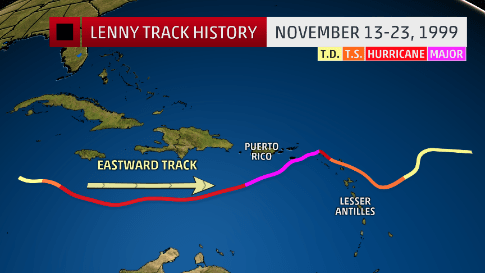
Hurricane Lenny – 1999

Hurricane Lenny is the strongest November hurricane on record, moving through the Caribbean from November 13th through November 23rd. The hurricane moved over Puerto Rico, Columbia, Saint Croix and the Leeward Islands, sustaining maximum winds of 155 mph at its peak. It was given the nickname ‘Wrong Way Lenny’, due to its unusual path and unfortunately caused major damage and 17 deaths. The name Lenny was retired from rotation, due to the severity of the storm.

Hurricane Mitch – 1998

Hurricane Mitch was a deadly storm (over 9,000 known victims, with another 9,100 still missing post storm) that formed in October but continured its cycle until November 9th, leaving behind staggering destruction.

The hurricane reached Cat 5, producing some of the highest wind speeds on record (177 mph) in the month of November. Mitch left catastrophic economic damage and destruction, stretching from Central America to Florida all the the way to the United Kingdom.

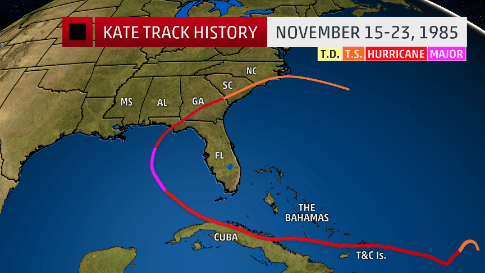
Hurricane Kate – 1985

Kate started out very disorganized and eventually strengthened to a Cat 3 hurricane. It made landfall as a Cat 2 hurricane on Mexico Beach, FL, with 100 mph winds and an 11 feet storm surge on November 21st. Its the strongest storm to hit the US in November and caused millions of dollars in damage.

To read the original article click here.

7 Reasons You Should Never Hire an Unlicensed Contractor

Being a licensed contractor in Florida is a privilege. Many do not understand the difference in being licensed and unlicensed. Obtaining and keeping your contractor’s license in Florida is expensive and there are requirements you must meet. An unlicensed company is taking the easy and unethical approach to assisting those in need.

Licensed or Unlicensed – Is It a Big Deal?

When you are in need of repairs, questions run through your head: What does it mean to be licensed? Why are some contractors licensed and others are not? Does it really matter?

Being a licensed contractor means they have passed all required testing, met the minimum experience level of four years, passed a credit and background check and they must carry insurance to cover liability and workers compensation.

Risks or Hiring an Unlicensed Contractor

  • No insurance – No liability: An unlicensed contractor is typically uninsured. You may end up being liable for personal or financial injuries to others. If they happen to damage your property, there is no insurance to cover that.
  • Poor qualifications and poor quality work: Unlicensed contractors usually do not have the education or qualifications required of a licensee. Therefor, they may do poor quality work and not finish the project, leaving the homeowner to pick up the pieces.
  • Possible criminal background: Unlicensed contractors also pose the threat for having a lengthy list of criminal history. This list may include violent crime, sexual offenses, substance abuse, fraud and/or theft. Do you wnat someone like that working on your property?
  • Scam artists: Unlicensed contractors often disappear after taking your money. The department cannot discipline an unlicensed person or help you with any recovery of repairs or money lost. These con artists usually try to scam those in need of urgent repairs, such as hurricane damage.
  • Not covered under homeowner’s policy: Most homeowner policies require any repairs be done by a licensed individual.
  • Limited resources for broken contracts: If you have a dispute with a licensed contractor, you have rights and can contact the department who will take disciplinary action. However, this action is not available if the contractor is not licensed.
  • Non compliance with building codes: Most projects require permits and inspections. Unlicensed contractors usually ignore such things. If your project isn’t permitted or doesn’t comply with the building code, you may have to remove or repair the work at your own expense and be subject to fines.

Before you agree to any repairs, confirm the individual is licensed and has insurance. Below are some helpful links for you to use:

Click here to verify a Pinellas County license.

Click here to verify a Florida State license.

To report unlicensed contractors in Pinellas County, click here or call 727-582-6767.

Why Hire a Licensed Contractor?

  • A licensed person has the required education, experience, insurance and qualifications to obtain a license. They must pass a competency examination before practicing.
  • Licensed individuals are screened for prior criminal history.
  • The department can discipline and even revoke a license if the person does not live up to professional standards. This is not a total safeguard, but it is a strong incentive for the licensee to do goo work.
  • You may be able to sue the licensee in civil court for problems related to the work done.

Steps to Create a Home Inventory Checklist

After a fire, burglary or other event in which you have lost possessions from your home, it may be difficult to remember the details of every one of the belongings that you have accumulated over the years. In this situation, having a current inventory of your possesssions, including make and model numbers, may help you with any potential insurance claims. Taking the time to document your belongings now can help you recover faster after a loss.

Here are some steps you can use to help build your home inventory checklist.

Step 1: Take the time to walk through your property. Compiling a comprehensive home inventory takes time and effort. The more detailed your inventory, the more useful it will be if you must make a claim. Document possessions inside your home and on your property that may be of value.

Step 2: Keep your inventory in a safe place. Creating a digital home inventory and storing it off-site will help ensure that it won’t be lost, stolen or damaged during any disaster at your home. You can also create a photo or video inventory and upload it to a cloud-based service.

  • First, take a picture of relevant rooms or items. Label pictures of rooms and important individual items with a description, including where you bought it and the make, model and serial number. Don’t forget to inventory items that may be out of sight in storage closets or drawers.
  • Second, wlak through your home or office using your phone to shoot video of the contents, describing them as you go.
  • Finally, digital home inventory programs allow you to upload multiple photos of each item, includidng photos of the serial number, receipt and other identifying details. If you choose to create a paper version, consider storing it off site in a safe deposit box.

Step 3: Update your inventory often. When you make a significant purchase, add the information to the inventory while the details are fresh in your mind. This is also a good time to delete items that you have replaced or no longer own.

Step 4: Remember you business assets. While most people thing of their home when making inventory, it is important to document the contents of your business, if applicable, as well.

Step 5: Consider valuable items. Valuable items like jewelry, art and collectibles may have increased in value since you brought them into your home. Check with your agent, if you have one, to make sure that you have adequate insurance coverage for those items, as they may need to be insured separately. Consider putting jewelry or other valuables that you don’t wear or use in a safe deposit box.

Source: 5 Steps to Create a Home Inventory Checklist – Blog – Travelers Insurance

Exploring Ozone Use in Odor Elimination

We have heard about how the ozone layer in our middle atmosphere protects the earth from harmful ultraviolet rays. Ozone is generated in electrical storms by bolts of lightning – that’s why it smells so fresh during and after a heavy storm. It’s also used in the cleaning and restoration industry. But what exactly is ozone?

Ozone, also known as “heavy oxygen” or “activated oxygen”, is simply a molecule of oxygen consisting of three oxygen atoms (O3) instead of two (O2).

“Normal” oxygen consists of two oxygen atoms bonded together. The bond that holds these two oxygen atoms together is relatively strong, resulting in a stable molecule. However, this bond, although strong, is not unbreakable. When an O2 molecule comes into direct contact with a certain wavelength of ultraviolet (UV) light, or an arc of high voltage electricity, its bond is severed, rendering the two atoms separate, each of which can be referred to as O1.

Oxidation

Oxidation simply refers to the process of an atom of oxygen attaching itself to a receptive molecule, which changes its structure. Oxidation essentially turns something into something else; oftentimes the change is dramatic. One example of oxidation is the transformation of water into hydrogen peroxide. There is one more oxygen atom in hydrogen peroxide (H2O2) than in water (H2O). Hydrogen peroxide is a good example for this article, as we are familiar with its ability to sanitize and disinfect. Its properties are so powerful, in fact, the hydrogen peroxide in bottles at the local pharmacy and grocery store have been diluted to 3%. even at three % dilution, H2O2 is extraordinarily effective at killing bacteria, fungi, viruses and a wide spectrum of germs. By way of comparison, 90% hydrogen peroxide can be used as rocket fuel.

Types of ozone generators

Ultraviolet generators produce ozone in the same way our sun creates and maintains the protective ozone layer between the troposphere and stratosphere. Typically, weaker, and usually less expensive, this type of generator has one or more ultraviolet bulbs mounted inside the unit that emit specific wavelengths of UV light, which separate the atoms of O2 molecules as ambient air is blown past the bulbs by an internal fan. This type of machine normally offers a lower ozone output, and the bulbs weaken over time. They also are prone to breakage, so the bulbs need to be replaced regularly. Corona discharge generators produce ozone with what’s called a “corona discharge tube” or “plate”. Generally offering a stronger and more reliable output than UV generators, corona discharge generators manufacture ozone in the same way lightning does – by ripping the O2 molecules apart with electricity. A high voltage electrical current is passed through a dielectric material (material that transmits electrical force without conduction) in the form of a tube or plate, while ambient air is blown through the tube or over the plate by a fan mounted at the rear of the unit. More powerful, and requiring less maintenance, corona discharge generators are typically the choice for restoration companies and those looking to do the job more effectively and in less time.

Proper operation protocol

Proper procedure calls for the operator to be sure the area is evacuated of humans and animals, and if extremely high levels are to be generated over an extended period, it is wise to remove plants and cover aquariums.

Signs that read “Do Not Enter: Ozone Treatment Area”, should be marked at all entrances. Ozone degrades (turns back into “normal oxygen”) quickly – in about 30 minutes. For this reason, it must be generated on site. (It cannot be kept in tanks) The huge upside to this quick degradation process is that, despite its unparalleled oxidizing/deodorizing/sanitizing capabilities, it leaves absolutely zero residue.

Since the composition of ozone (O3) is merely a third oxygen atom attached to a normal oxygen molecule (O2), the process of reverting back to oxygen is merely a detachment of the third atom from the other two, more strongly bonded atoms. These remaining single oxygen atoms, which don’t join with and alter the molecular composition of odor molecules, rejoin with other single detached oxygen atoms, creating normal O2.

Benefits of offering ozone treatment

If your business offers carpet cleaning, duct cleaning or virtually any cleaning service, ozone treatment can be the best value added service you offer. Cigarette, pet, musty, moldy and cooking odors all can be permanenetly removed quickly and easily with ozone.

Recap the benefits of ozone

  • Ozone is unequaled in its ability to sanitize, disnifect and deodorize
  • When used correctly, ozone can be one of the safest services offered
  • Ozone is completely non-residual, leaving behind only clean, pure oxygen

To read more information, click here.

Keeping Your Car Mold Free

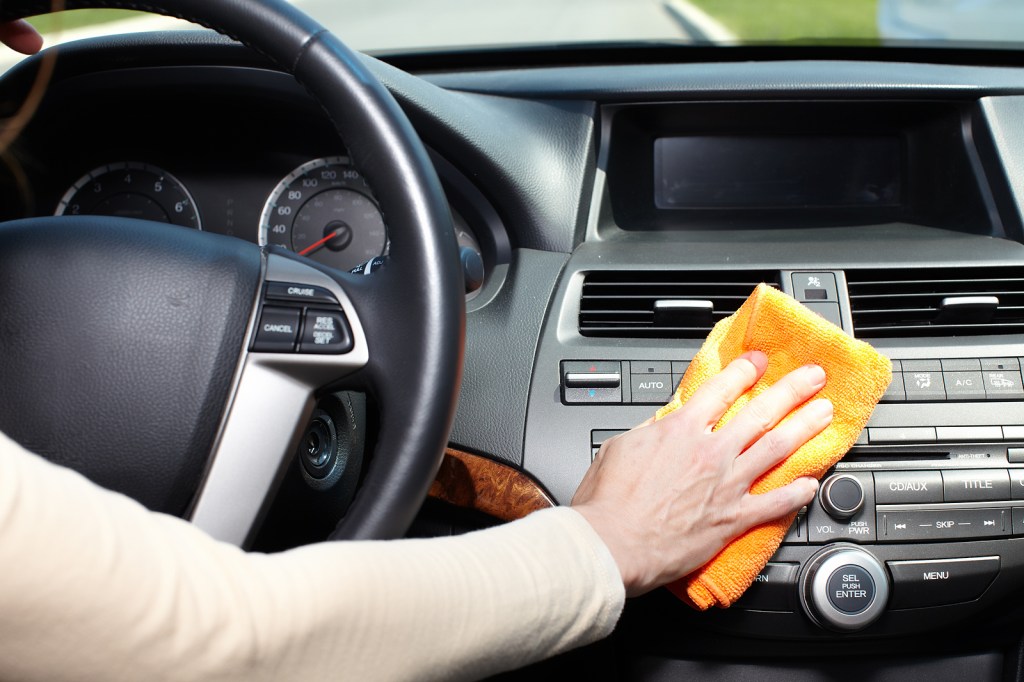
Hand with microfiber cloth cleaning car.

When people think of mold, most of the time their thoughts turn to homes or other buildings. Older homes that are not well-maintained, basements that have flooded, as well as buildings that have been through natural disasters; all are at risk of having mold. Unfortunately, mold can also be found in many automobiles that are not properly sealed or have had water in them from flooding. Yet, armed with just a few basic items, it’s quite possible to make sure your car does not become one of the many moldy machines on the road.

All mold starts as a stain on fabric or other surfaces, so always be on the lookout. Mold tends to form most often on fabric areas, such as seats, and door panels, so be especially careful of these areas. One of the best ways to prevent mold is to make sure the weather stripping is properly maintained. A good rule of thumb is to conduct an inspection each time you wash your vehicle. If there are any areas where water is leaking into the interior, the windows will begin to fog up and condensation will form on the glass, letting you know you’ve got a problem. Visiting an auto detailing shop can get this problem fixed quickly, often at a reasonable price.

Use Very Little Water

When cleaning the inside of your vehicle, use as little water as possible. Mix a small bowl of water and dish detergent together until it forms a large amount of suds on top, then scoop off the suds and place them in another bowl. Begin by taking a cleaning coth and gently rubbing the suds on the fabric areas. You are cleaning while using practically no water. Keeping the area very dry and at little risk of developing mold.

It’s All About the Rice

A small bag of rice can work wonders to prevent mold. By placing an open sandwich bag that’s full of rice inside a door panel or other spot where it won’t spill, you can prevent mold from forming inside your motor vehicle. Since rice absorbs moisture, it will help prevent mold. Once or twice a year, discard the old rice and replace it with a fresh bag to stay on top of the situation.

Vacuum with Baking Soda

Baking soda is a great item to help prevent moisture, so sprinkling some on the seats and carpet inside your car will help keep mold at bay. After sprinkling the baking soda, let it work its magic for two hours and then vacuum it up. If you live in an area that’s humid, this is a great trick to use throughout the year.

By spending two or three dollars on some supplies, you can make sure your motor vehicle will pass the mold inspection year-round. A few minutes of preventive measures now and then will allow you to have a vehicle that not only looks good inside and out, but is also free of mold and mildew.

Source: Mold, Mildew and More: Keeping Your Car Mold-Free – Brian Reeves – Blog – Mold Blogger

Water Heater Leaks and Overflows

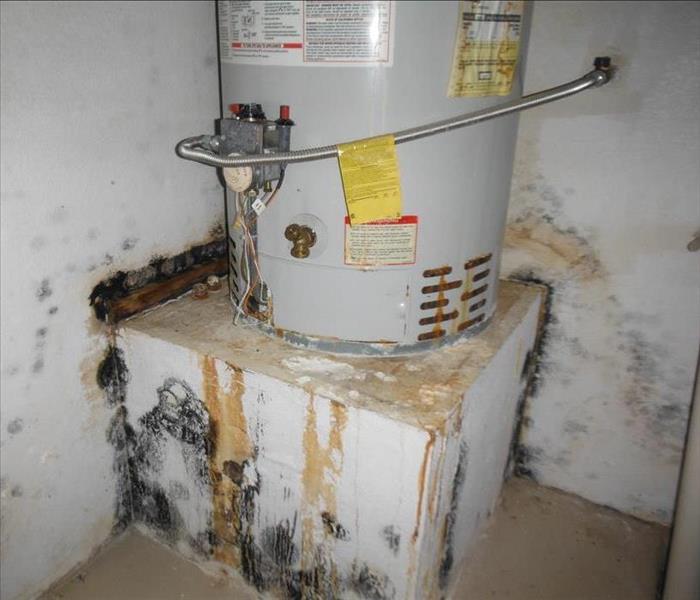
There is no doubt that hot water heater leaks or overflows will cause extensive damage to your home, but even a water heater pipe dripping or leaking slowly will cause major water damage over time. As the water becomes absorbed into the particle board and swells, it causes the floor to rot and decay. Moreover, the seemingly small water heater overflow leak could lead to water heater flooding and will eventually cause mold in carpeting, as well as permanently stained walls.

Causes of leaks

The life span of most water heaters is about 8-15 years. So, water heater leaks and overflows are just a matter of time for most people. There are different causes for water heater damage and the resulting flooding, so the best and simplest solution is to try and avert extensive water damage in the first place. Proper maintenance of your water heater pipes, water heater overflow pan and water heater overflow valve is extremely important, given the capacity of water heater tank overflows to cause so much water damage. Regular preventative maintenance may ward off water heater leaks and the resulting extensive, expensive repairs.

All water heater pipes and valves must be checked for leaks and drips regularly. Also, make sure to check under the water heater, in case corrosion and rust have eaten away at the bottom of the tank. Continuous water heater leaking into the water heater overflow pan can be caused by corrosion and sediment build up inside the tank. Periodically letting out some water from the spout at the bottom of the water heater should take care of the sediment and minimize corrosion. Prior to performing this procedure, you should turn off your gas or electric power and wait for your water to cool a little. Also, turn off the valve for incoming water and drain water into a bucket or toward the outside of the house.

The temperature/pressure valve on your water heater is a safety feature to release water if the temperature and pressure in the water tank get to be too high. If the valve is not working properly the water heater tank may explod . Since water heater valves may be defective or old and may leak, a regular check could expose any such problem before it gets out of hand and causes water heater overflow valve leaking. As you check the valve, keep in mind that the water in the tank is hot and can cause serious burns. When you pull up or push down on the valve and hot water comes out from the overflow pipe, the valve works as intended.

What to do when you spot a water heater overflow

Sometimes, you’ll be able to spot a water heater overflow at its early stages. If this happens, you can take immediate action and contain the damage before calling for help. These are the basic steps:

  1. Put on protective clothing – Make sure to wear rubber boots, gloves and goggles. If water is gushing out from the water heater, wear a vest or a raincoat for an extra layer of safety.
  2. Survey the area carefully – Make sure that the water on your floor isn’t hot enough to scald you. A room full of steam is a red flag. Make sure there’s good visibility and check carefully for power outlets or electrical wires that may have been submerged to avoid the possibility of getting shocked.
  3. Shut off the water supply – Look for the cold water pipe that feeds water to the heater. It should be the pipe that comes from the main water line and goes to the top of the heating chamber. Look for the valve that controls water flow and turn it clockwise until it won’t twist anymore. Normally, the water supply shuts itself off when the tank is full, but since a leak results in a tank that never fills up, the water will keep on running until it’s manually shut off.
  4. Turn off the heating ASAP – If the water overflow is caused by a malfunctioning thermostat, the water isn’t the only thing you should be concerned about. The heating element will not shut itself down, making it waste energy or even possibly start a fire. As the homeowner, you should know what powers your heater, electricity or natural gas. If your heater runs on electricity, go to your breaker box and flip the switch that feed power to the heater. If you use gas, shut off the gas line that supplies the heater. If you smell the scent of gas, make sure to get everyone out of the house until the air is cleared.
  5. Document the incident – Take photos of the parts of your home and its furnishings that may have been damaged by water. Take notes on what happened as you recall the events. This will be insturmental in filing a successful insurance claim.
  6. Call for professional water damage cleanup services – Water damage can be a nightmare to contend with after a water heater overflow. If done incorrectly, it leaves behind a musty smell and it can permanently damage your home’s structure and the items in it. Bacteria and fungi can also fester and pose a hazard to your home’s inhabitants.

To read the original article click here.

Design a site like this with WordPress.com
Get started