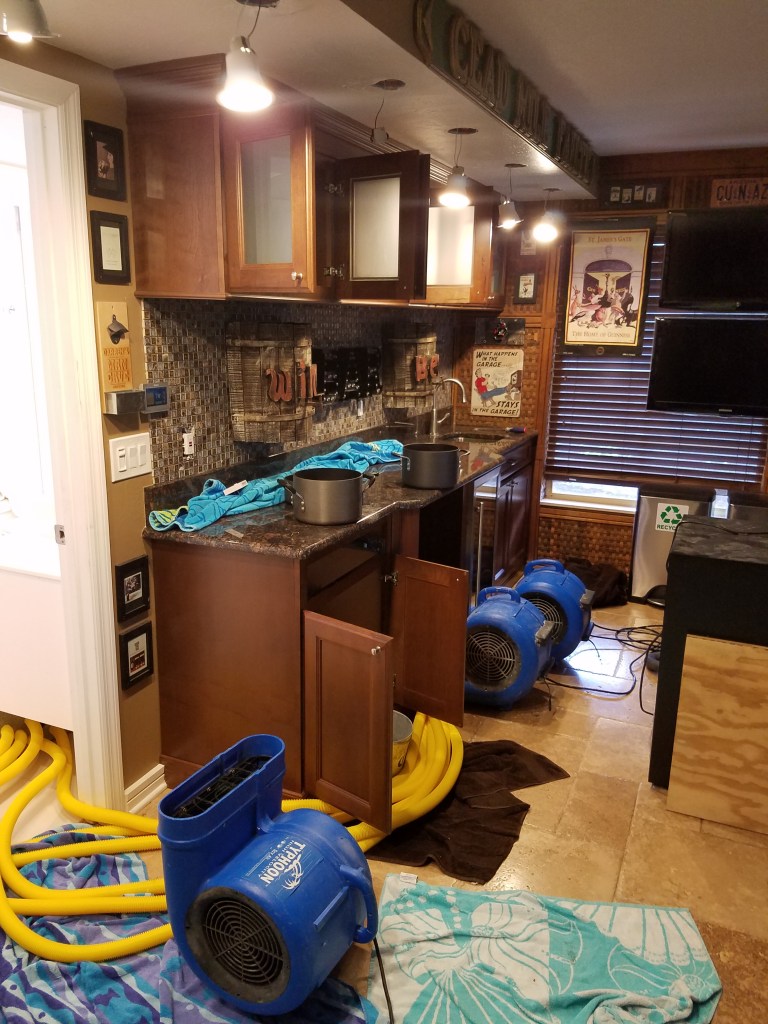
When you experience water damage, the water can wreak havoc on the structure of your home, your personal belongings and the health of the inside environment. Depending on the type of water event you experience, the water may be highly contaminated. With just an inch of water, high dollar items can be ruined, like carpet, wood flooring and furniture. Even small amounts of moisture create a perfect breeding ground for mold, which can ruin the structural integrity of your home and its contents, as well as lead to poor indoor air quality which can contribute to many health realted issues. Preventing a water event from escalating to mold growth is the key to keeping your home’s air clean and healthy.
The following are steps you should take when you experience a water event in your home, whether it’s a sudden pipe burst or weather related.
Ensure the safety of the area – Before entering an area with water damage, survey the area for danger from a power source. If necessary, turn the power to the area off at the breaker box. If it is obvious where the water is coming from, turn off the water at it’s source or the water main, if necessary.
Get rid of the water – There are several ways to begin removing the standing water, but however you do it, do it quickly. If you don’t have power to the area, or are worried about getting shocked, the old-fashioned, manual method way will work. Use old towels, buckets and mops to soak up as much water as possible. You can pour the water down the drain or on your lawn. A wet/dry vacuum can be used too, just be careful to plug it in an outlet away from the water. Don’t use an extension cord, as the connection could also short out and give you a nasty shock. Remember, water and electricity don’t mix!
Dry out affected area – Once you’ve removed all the water, use fans and a dehumidifier to help dry out the area. It is helpful to open windows to allow for air circulation and faster drying. It is important to dry out the area as quickly as possible.
Disinfect – After the area has dried out, including any structural items (insulation, drywall…) use a good disinfectant to get rid of any bacteria that might have been in the water or beginning to grow. Gloves Off Disinfectant is a non-toxic but powerful disinfectant. Disinfect all areas affected by water, including walls, wood and non-unholstered furniture. If you experience problems or know you will need further assistance, don’t hesistate to contact a professional, particularly if it is the water event was caused by toilet or sewage backup. They will have the equipment and knowledge to get the cleanup done right.

