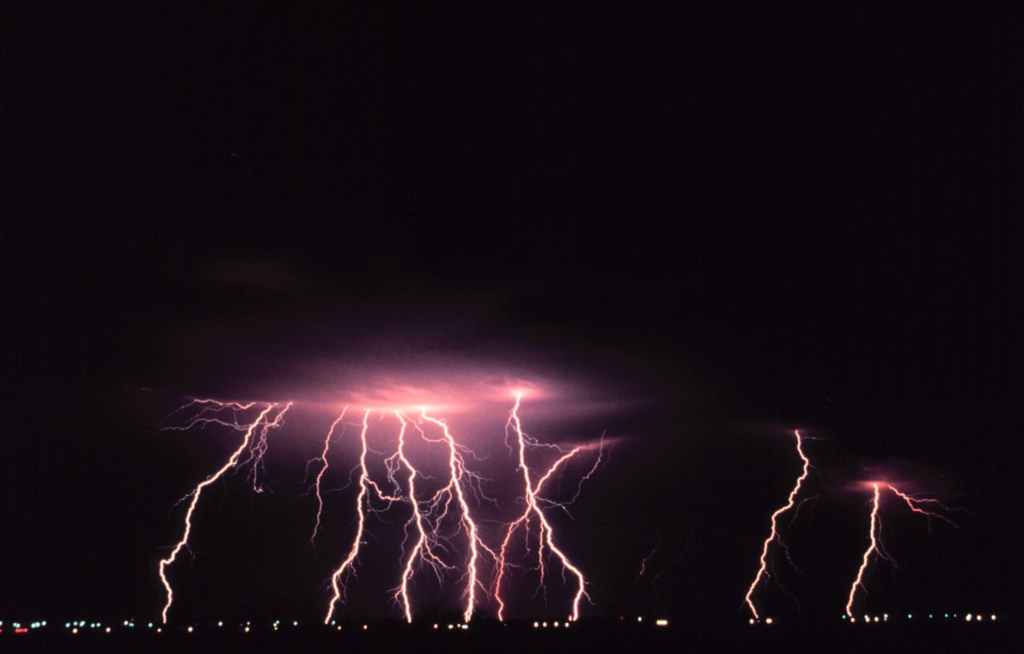
What is lightning?
Lightning is the flash of light produced by a discharge of atmospheric electricity that occurs within clouds, between clouds or between clouds and the ground. The spark can reach over five miles (eight km) in length, raise the temperature of the air by as much as 50,000 degrees Fahrenheit (27,200 degrees C), and contain a hundred million electrical bolts. The rapid expansion of heated air causes the thunder. Since light travels faster than sound, the thunder is heard after the lightning. If you see successive strokes of lightning in the same place on the horizon, then you are in line with the storm, an it may moving toward you.
Facts & Statistics
More than 200,000 lightning damage claims are filed each year with insurance companies. One out of every 200 homes get struck by lightning each year. Lightning starts about 4,400 house fires each year. A bolt of lightning can reach temperatures up to 50,000 degrees, which is 5x hotter than the surface of the sun. The chances of becoming a lightning victim in the US in any one year is 1 in 700,000. Lightning can cause cardiac arrest or even death. Injuries from lightning range from severe burns and permanent brain damage to memory loss and personality change. About 10% of lightning-strike victims are killed, and 70% suffer serious long-term effects. About 400 people survive lightning strikes in the US each year. Lightning is not confined to thunderstorms. It’s been seen in large hurricanes, extremely intense forest fires, volcanic eruptions, surface nuclear detonations and in heavy snowstorms.
Safety Tips
- Lightning rods can help protect a building from catching fire, although they are not 100 percent effective. They do not protect against power surges.
- Do not use a landline telephone, electrical wires may be hit by lightning. even using a cell phone is hazardous because the metal parts can conduct lightning. Most people hurt by lightning while inside their homes are on the telephone.
- A automobile with a metal top can offer you some protection – but keep your hands from the metal sides.
- Victims of lightning do not retain the charge and are not “electrified”. It is safe to help them.
- Stay away from windows and doors and stay off porches.
- Do not lie on concrete floors and do not lean against concrete walls.
- If outdoors do not stand underneath or near a tree.
- Whether inside or outside, do not be in or near a water source.
Lightning can enter your home in three main ways:
- A direct strike
- Through wires or pipes that extend outside the structure
- The ground
Once the lightning has entered your home, it can travel through the electrical, phone, plumbing and radio or television reception systems. Lightning can ruin the electrical system in your home and it can also cause a fire. The fire could very well start within the walls, so you may not notice it until it’s too late. You should call 911 immediately after your home is struck by lightning. The fire department handles all lightning calls and they are equipped with thermal imaging cameras to locate a possible fire burning in your home. They also will be able to survey the damages and let you and your family know when it is deemed safe to enter again.
What if lightning strikes your home?
After you have gotten everyone out safely and the fire department has assessed your home, you may be left with damages. A standard home owner’s insurance policy should cover damages caused by lightning, including fires and fried electronics. Below are some tips you can use that will help you get your home back in order:
- Keep detailed records of all big-ticket purchases, such as TVs, laptops and other expensive electronics. The insurance company will want to see proof of ownership.
- Report a lightning strike to your agent as soon as possible.
- Check with your claim representative before you discard any items you plan to claim as damaged.
- Keep accurate records of how much you spend repairing or replacing items.
- Review your policy for specific coverage information.
Lightning’s destruction can be random. In some instances, your computer could be fried but your TV still works. You should check all electrical equipment that was plugged in during the time when the lightning struck for damage. If lightning causes fire in your home, you will need a professional to restore your home. Call PRS at 727-NO-WATER. They have technology and experience and they are available 24/7. PRS is equipped to handle fire and smoke damage, as well as any other disaster your home may encounter.
Source: Larry West – “Why is Lightning Dangerous?” Web blog post. Environmental Events – Dec. 2016.

